
Queen Vegas Casino on a handset — the regal-themed lobby, the cashier, the live-chat widget, plus every personalised Daily Picks offer reaching the account, all reachable through Safari or Chrome without committing to any installation step.
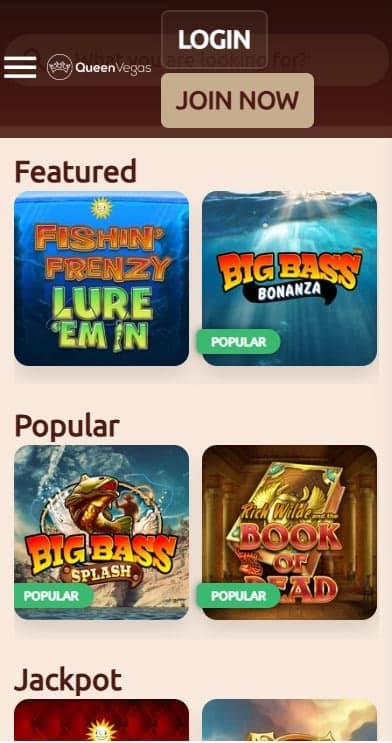
Handset access at this venue routes through a single delivery channel — the responsive HTML5 lobby rendered inside Safari, Chrome, Edge, or any other modern smartphone engine. No native iOS or Android binary surfaces at any point during our review window, which makes the brand a browser-first proposition rather than an application-led one. We tested the royal-themed lobby across an iPhone 14, a Pixel 7, plus a slightly older Galaxy A52 to evaluate cross-device behaviour. Layout adapts cleanly across each handset without functional gaps versus a laptop session, although the absence of a dedicated downloadable package introduces a handful of cosmetic trade-offs that readers used to native-app casinos may notice.
Coverage below walks through the practical workflow: opening the regnal lobby inside a mobile browser, adding a home-screen shortcut for application-style behaviour without invoking any install step, what shifts versus desktop play, performance characteristics under weaker mobile signal, the cashier and identity-document upload flow on a small display, plus the data and battery considerations any extended session needs to factor in. Every observation reflects browser-based testing across UK-region handsets running through standard carrier networks during weekday evening windows.
| Access Path | How It Works | Best Suited For |
|---|---|---|
| 🌐 Direct Browser Session | Open Safari, Chrome, Firefox, or Edge and head to the casino domain — no installation step or permission grant required at any layer | Casual visitors, occasional players, anyone preferring to avoid additional device storage commitments |
| 🏠 Home-Screen Shortcut | Add a launcher icon via the share menu — opens the regnal lobby inside a dedicated tab with one tap | Regular session players seeking quick access without committing to a full installation package |
One framing point belongs near the front: Apple's marketplace plus Google Play both impose tight restrictions around real-money casino software inside the UK market, which is why most British-facing brands — Queen Vegas among them — invest in responsive browser delivery rather than chasing native distribution that the platform owners will not host. The browser route closes any meaningful functional gap against what a dedicated binary would otherwise deliver. We will walk through the shortcut workflow on either platform because it captures the polish closest to a true application without invoking any install permission.
This delivers near-application behaviour without invoking any installation step at all. Tapping the icon takes you straight into the royal-themed interface with a single gesture. Safari handles session-cookie persistence, identity-document upload through the device camera, plus streamed-room audio routing without anything additional needed. The browser address bar remains visible across the upper viewport — the only meaningful cosmetic difference versus a true standalone window. We treat that small compromise as fair exchange for the security benefit of skipping any sideload step entirely.
Where Chrome detects PWA-compatible markers on the operator's domain, the menu may surface "Install" rather than the standard shortcut option. Selecting that route packages the experience through Android's WebAPK framework, producing something closer to a real application — dedicated task-switcher entry, separate storage allocation, plus a standalone window that hides the browser interface. PWA support varies by browser version and operating-system release, so the more reliable path for most readers is the regular shortcut, which delivers the same usability benefit without depending on PWA detection specifically.
British readers comparing this brand against the wider iGaming landscape sometimes ask why Queen Vegas does not offer a downloadable mobile binary alongside the browser route. Several structural reasons explain the choice across the UKGC-supervised market broadly:
| Factor | What Drives the Decision |
|---|---|
| Apple App Store Policy | Real-money gambling applications face tight platform-level restrictions inside the UK market · approval cycles run lengthy when they happen at all · most brands route around the channel rather than fight it |
| Google Play Store Policy | Similar restrictions apply on the Android side · operators with native binaries typically distribute outside the marketplace, which itself raises security questions some brands would rather avoid entirely |
| Maintenance Overhead | Native applications require parallel iOS and Android codebases, separate release cycles, plus marketplace-review delays · browser delivery sidesteps every one of those costs while delivering identical functional coverage |
| Responsive HTML5 Maturity | Modern slot engines and live-dealer streams run cleanly inside mobile browsers · the technical case for a native wrapper around what is already a web experience has weakened year over year |
| Update Distribution | Browser sessions always load the latest assets · native applications require user-initiated update downloads · stale versions can persist on devices indefinitely otherwise |
Our editorial position on the trade-off sits favourable to the browser-first approach. Readers familiar with native-app casinos at competitor brands may notice slightly more vertical space consumed by browser chrome plus the absence of OS-level push notifications, but nothing structural disappears compared with a desktop visit. The polish gap closes substantially with a home-screen shortcut and disappears almost entirely once the session is underway inside an actual game.
| Element | Desktop Behaviour | Mobile Behaviour |
|---|---|---|
| Navigation | Horizontal header bar with category labels visible at once · vertical sidebar surfaces game filters alongside provider selection | Collapses into a hamburger menu accessed through the upper-left glyph · filter controls slide in from the side panel rather than sitting permanently visible |
| Game Lobby Grid | 4–6 thumbnail columns per row depending on viewport width · provider filtering happens through the sidebar | 2–3 columns per row · infinite-scroll loading as you swipe downward · search and filter glyphs sit pinned to the upper bar |
| Live Dealer Streams | Video window alongside betting controls displayed inline · table information panels open in side overlays | Portrait orientation stacks video above the controls · landscape rotation restores the side-by-side arrangement · dealer chat opens through a separate slide-up panel |
| Cashier Forms | Multi-column field arrangement with amount selectors visible alongside method icons | Single-column stacked layout · the on-screen keyboard sometimes overlaps confirm buttons during deposit-amount entry |
| Promotional Banners | Carousel display across the upper section of the homepage · Daily Picks tile sits prominent inside the dashboard | Compressed banner stack · Daily Picks cards display in vertical sequence below the welcome offer |
| Live-Chat Widget | Floating bubble pinned to the lower-right corner | Identical placement, reduced footprint to preserve visible playing surface · expands to full-screen overlay when activated |
| Account Dashboard | Tab-based layout with deposit history, withdrawal status, plus VIP progression visible on a single screen | Stacked-card layout · each section opens to a dedicated screen rather than sitting visible together · back navigation returns to the dashboard root |
Cold-loading the lobby on a 4G LTE connection completed inside three to four seconds across our sessions. Streamed rooms demand more headroom — clean rendering held above roughly 5 Mbps downlink, with occasional buffering hiccups across weaker mobile-signal patches. Wi-Fi sessions handled everything without complaint, including extended baccarat runs and the Evolution roulette rotation at full HD across British weekday evening windows.
Battery drain runs at the typical figure for an extended browser session involving live video — roughly 12–18% per hour of active streamed play on a recent iPhone or flagship Android device. Older handsets burn through power noticeably faster than the figure suggests. Closing background applications plus dimming the display extends your effective session window if you plan to play across longer stretches.
Slot play sits light on bandwidth — roughly 50–100 MB per hour, well inside most monthly mobile allowances. Streamed-room sessions change the picture meaningfully: figure 500 MB to 1 GB per hour at standard HD resolution. Readers on capped data plans should monitor consumption carefully or restrict live tables to Wi-Fi sessions where possible. Crash-style instant titles and the wider short-cycle multiplier category sit between those two figures because their visual layer carries less video data than a streamed table but more animation than static slot reels.
Audio routing through Bluetooth headphones works reliably across both platforms during streamed play, though occasional latency drift surfaces across faster-paced live formats. Switching to wired earbuds eliminates that variance entirely if you find the lag bothersome enough to affect engagement. Game-show formats — Crazy Time, Lightning Roulette, Monopoly Live — sit among the more demanding live presentations because their visual-overlay layer combines with the streamed feed to produce higher cumulative data throughput than a classic blackjack table would.
Password recovery runs through an email-based reset link. Tapping "Forgot password" triggers a message sent to the address on file. Given that 2FA is not enforced platform-wide, we recommend storing the credentials inside a reputable password manager paired with a long, unique, randomly generated string rather than relying on memory or browser autocomplete. Gambling-account credentials sit among the higher-value phishing targets across the wider internet; defending them properly is worth the modest setup effort even where the platform's own controls in this area are lighter than they could be.
Browser-first works at this venue. Functional parity with desktop sessions runs at effectively 100% — every feature reachable from a laptop turns up on a handset, including cashier flows, identity-document uploads, streamed-room access, the VIP Lounge layer, the Daily Picks rotation, alongside the self-service responsible-gambling toggles. Absence of a marketplace-distributed native binary costs a small amount of polish — slightly more vertical space lost to browser chrome, no OS-level push notifications, occasional keyboard overlap quirks, plus no biometric login — but nothing structural disappears compared with a desktop visit.
For British readers used to UKGC-licensed casino applications with their slicker onboarding plus integrated home-screen presence, the experience here will feel slightly less refined at the periphery. Underlying gameplay layer sits identical, though, because the same studios push the same HTML5 builds across every venue licensing their catalogues. What differs lives inside the wrapper around those games, and that wrapper here is functional without crossing into premium territory.
No native binary appears through Apple's marketplace for this brand — the platform restricts real-money casino distribution across the UK market and no operator-distributed alternative for iPhone or iPad surfaces during our review window. Browser-based access through Safari delivers complete functional coverage instead, with a home-screen shortcut closing most of the polish gap against a native application experience.
The operator has not distributed an Android binary either — neither through Google Play (which restricts real-money casino software) nor through the brand's own domain via a sideload route. Any third-party site claiming to offer a Queen Vegas APK download should raise immediate scepticism, because no such file exists from the operator itself. Stick with the browser route plus a home-screen shortcut for the safest and most reliable mobile experience.
Where PWA-compatible markers are detected by Chrome, yes — the "Install" option surfaces alongside the standard "Add to Home Screen" choice. Behaviour varies by browser version and operating-system release, so the more reliable path for most readers is the regular shortcut, which delivers the same usability benefit without depending on PWA detection specifically.
Yes — slots, live-dealer tables, video poker variants, RNG card and table games all render through the responsive layout. Live presentations may show minor differences versus desktop (stream above controls in portrait orientation rather than side-by-side), but functional access stays complete across every content category. Progressive jackpots including Mega Moolah work identically across mobile and desktop sessions; the cross-network jackpot ticker updates in real time inside the mobile lobby.
Roughly 500 MB to 1 GB per hour at standard HD resolution for live-dealer rooms. Slot-only sessions sit far lighter at 50–100 MB per hour. Readers on capped data plans should restrict streamed tables to Wi-Fi where possible. Game-show formats sit at the higher end of the live-presentation consumption range because their visual-overlay layer combines with the streamed feed to produce higher cumulative throughput than a classic table presentation would.
Yes — the responsive cashier opens the device camera or photo library when document submission becomes required. Capturing the image at the moment of upload usually yields cleaner results than transferring scans from a laptop, because lighting and orientation are easier to control with a handheld device against a flat surface. Identity verification clears typically inside 24 hours of clean document arrival across the documentation we examined.
RNG outcomes resolve server-side, so the spin completes regardless of whether your device stays connected through the cycle. Reopening the lobby restores the session and credits any wins. Streamed rounds resolve based on the actual dealer outcome at the table; you receive whatever the round delivered, win or loss, once reconnection occurs.
Not consistently across the documentation we examined. Two-factor authentication is not enforced platform-wide at this brand — a security gap worth noting against the wider UKGC-supervised competitor set. Defensive responsibility falls on the player side: use a long, unique, randomly generated password stored inside a reputable manager, and consider rotating it periodically.
Daily Picks rotates personalised offers every 24 hours across every device the account accesses — there is no specific mobile-only promotional layer beyond what surfaces on the desktop interface. Whether handset use influences the personalisation engine's offer selection sits outside what the operator publishes openly; behavioural targeting could conceivably read device context, but the public terms reference recent playing history rather than device-class signalling.
No. GamStop integration runs at the signup stage as the regulator requires of every UKGC-supervised brand. Any reader previously enrolled in the national scheme will find the registration attempt blocked across both mobile and desktop interfaces — the check sits at the account-creation layer rather than at the device level. Anyone considering self-exclusion as an engagement-management tool can enrol through gamstop.co.uk.
Shortcuts behave like bookmarked tabs launched in dedicated windows. They retain access to browser cookies, autofill data, plus the device camera for identity uploads, while running inside the browser's security sandbox rather than as a separately installed application. Practical effect: identical gameplay access with none of the permission-grant or storage-allocation footprint that a sideloaded binary would carry, plus automatic update behaviour because each session loads the latest assets from the live domain.
Functional parity is the headline. Every feature reachable from a laptop surfaces on a handset, and the polish gap closes substantially through a home-screen shortcut. The trade-off — no biometric login, no push notifications, slightly more vertical space lost to browser chrome — sits visible but not consequential for most readers. Browser delivery here works as the modern responsive web is meant to: predictable, secure, identical across every device, without the maintenance overhead that parallel iOS and Android codebases would carry.